How to Fill Out SSA-3369 (Work History Report), With Examples
Tell the truth, and add all the important details!
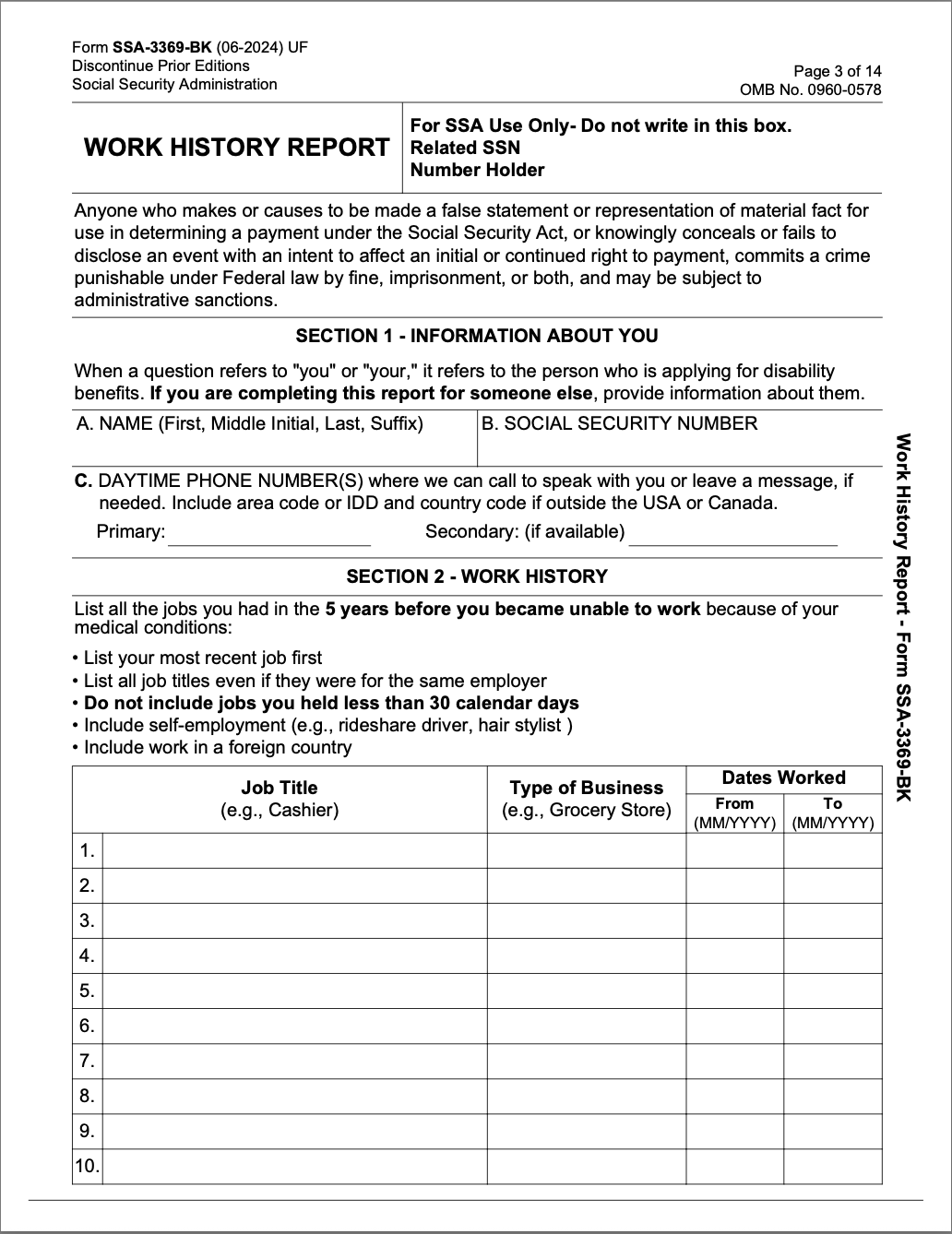
If you are applying for Social Security disability benefits, you may need to complete an SSA-3369, the Work History Report. This form helps the Social Security Administration understand the kind of work you did in the past and what your job required physically and mentally, so that Social Security can determine whether you can still do that work today.
Many disability claims are affected by how clearly this form is completed. Below, we explain how to fill out SSA-3369, why work history matters, what details matter most, and give some examples.
Please remember that these are general tips. They might not apply to your case, which might have contrary considerations. If you want advice specific to your case, please consult with a Social Security disability attorney.
What Is Form SSA-3369 (Work History Report)?
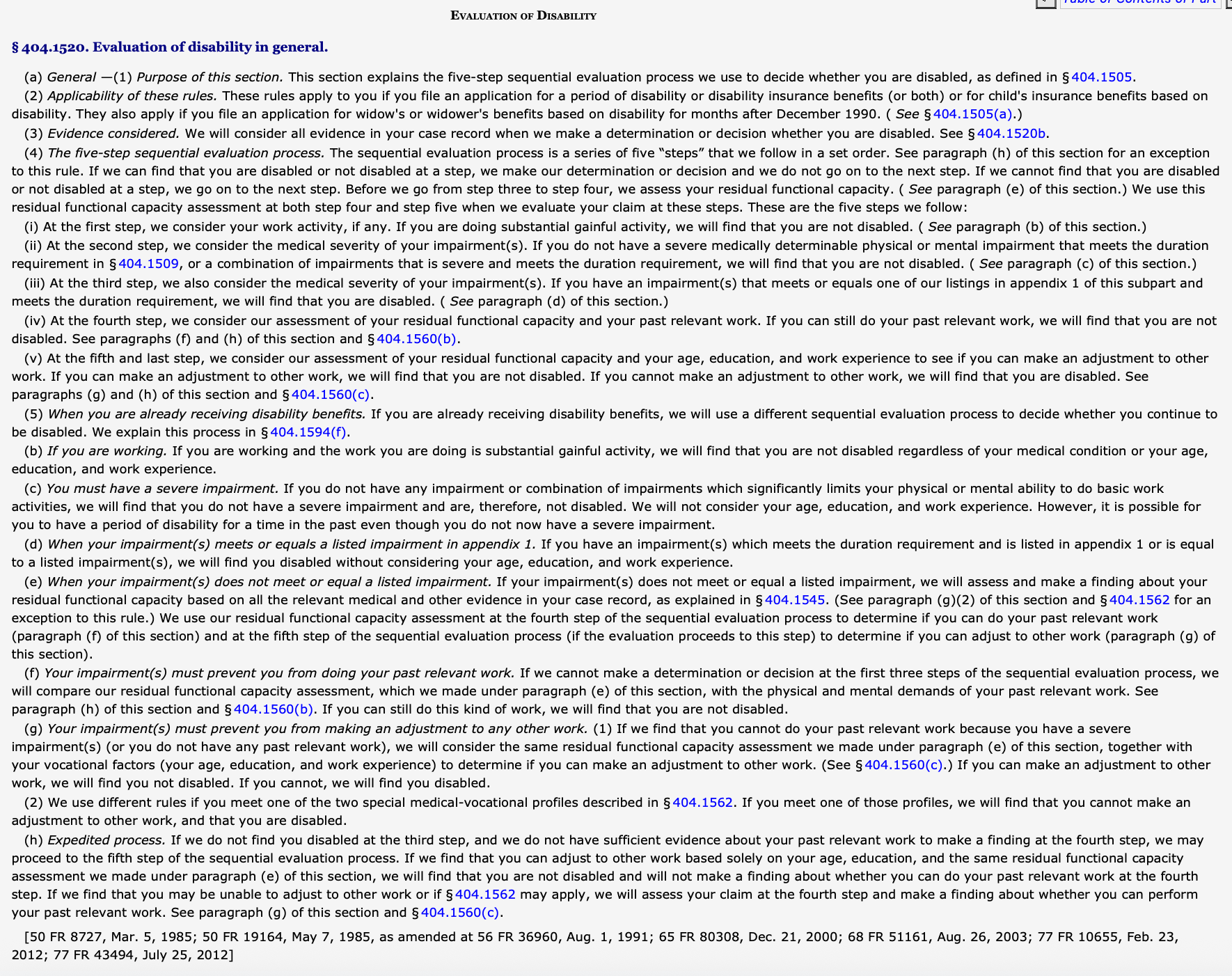
SSA-3369, also called the Work History Report, asks about the jobs you performed in the last five years (under a recent rule change, the Social Security Administration now only considers work from the past five years, except in unusual circumstances). The Social Security Administration uses this form to evaluate:
- the specific duties of your past jobs, which is used to classify job responsibilities
- how much lifting, walking, standing, or sitting was required
- whether you used machines, tools, or technical knowledge
In other words, this form is not just about your job title. It is about what your job actually entailed on a day-to-day basis. The disability adjudicator—including the ALJ at a disability hearing—will use the information to decide whether your past work can still be performed despite your medical condition(s), and whether you learned any skills that could transfer to other work.
Why Does Work History Matter?
The Social Security Act requires that Social Security disability adjudicators consider past work experience. See 42 U.S.C. 423(d)(2)(A). In practice, the agency looks at whether you can still perform your past work or learned skills that allow direct entry into other employment.
The SSA-3369 Work History Report gives Social Security a clearer picture of the physical and mental demands of your prior jobs. If, for example, your work involved heavy lifting, then back problems might prevent you from returning to past work.
A detailed work history can help show why your medical condition prevents you from returning to the jobs you did before. If the form is vague or incomplete, Social Security may not fully understand how demanding your past work really was.
Why the SSA-3369 Matters in a Disability Claim
A common shortcoming is listing only a job title like “cashier,” “warehouse worker,” or “cleaner.” Two people with the same title may have done very different work. For example, it might require technical skills to clean a doctor’s office, while it might require significantly more physical demands to clean at an automotive factory.
Social Security wants to know the real demands of the job, including:
- how many hours you stood or sat
- how much weight you lifted
- whether you supervised others
- whether you had to bend, reach, kneel, write, type, or use machinery
- whether the work required concentration, speed, or technical skill
The more accurate and specific your answers are, the better the agency can understand the demands of your past employment.
How to Fill Out SSA-3369
When completing the SSA-3369 Work History Report, keep these tips in mind:
1. Describe what you actually did
Do not rely on a short title alone. Explain your daily tasks in plain English.
Instead of: “Warehouse associate”
Consider: “Loaded and unloaded delivery trucks at paper supply company, moved inventory with pallet jack, lifted individual reams of paper, assured quality of paper prior to delivery.”
2. Be specific about physical demands
After we join a claim, we see lots of incomplete forms. The SSA-3369 asks a lot of questions. It asks that you estimate how much time you spent:
- walking
- standing
- sitting
- climbing
- stooping
- kneeling
- crouching
- crawling
- handling large objects
Note that it asks the heaviest weight you lifted—even if you did not have to lift that much on a daily basis—and how often you lifted it. After you answer the questions, check to see if your answers are correct. We have seen forms where people claim to walk for 10 hours per day, sit for 10 hours per day, and crawl for 5 hours per day. The adjudicator will doubt such answers—unless you worked shifts exceeding 24 hours, you would not have had enough time for that much exertion.
3. Include mental and concentration demands
If your job required paperwork, customer service, scheduling, problem-solving, multitasking, reading instructions, or dealing with deadlines, include that too. Often, the adjudicator needs to know this information to properly classify your past employment.
4. Tell the truth
Some applicants want to make their past work sound easier than it really was. Others want to make their past work sound exceptionally difficult. It’s always best to tell the truth, and to include all the important details. You’re applying for disability because your health keeps you from working: You just need to include all the details so that the Social Security Administration can understand the demands of your past work.
SSA-3369 Examples by Job Type
Here are sample descriptions to show how a claimant might describe past work.
Example 1: Cashier
Job title: Cashier
More complete work description: “Operated cash register, scanned items, handled cash and credit card payments, assisted customers, bagged items, cleaned work area, stocked shelves during slow periods. Ensure that customers had positive experience, directed them to the pharmacy, and informed them about available merchandise.”
Why this helps: This example shows how the person did not just operate a cash register—they also had significant customer contact, and also supported other store functions when they could.
Example 2: Office Assistant
Job title: Office Assistant
More complete work description: “Answered phones, scheduled appointments, filed insurance claims, reviewed documents related to dental treatments, greeted visitors, and handled incoming mail.”
Why this helps: While this person might have been titled an “office assistant,” the more complete description explains how they had responsibilities specific to a dentist’s office.
Example 3: Home Health Aide
Job title: Home Health Aide
More complete work description: “Assisted patient with bathing, dressing, toileting, meal preparation, and light housekeeping. Helped transfer patient from bed to chair. Helped schedule appointments and take medications.”
Why this helps: Home health aides often have significant lifting requirements, and this description helps demonstrate why—they help lift their patients! And it also explains that home health aides have significant organizational responsibilities, too.
Common Mistakes on the SSA-3369 Work History Report
When filling out SSA-3369, avoid these common errors:
- listing only job titles without duties
- underestimating lifting requirements
- forgetting to include standing and walking time
- leaving out mental demands
- describing only parts of the job instead of the full job
These mistakes can make it look like you are able to return to past work when that may not be true.
Final Tips for Filling Out SSA-3369
Before submitting your SSA-3369 Work History Report, review each job carefully. Think about what a normal workday really looked like. To the extent you are able, use simple, specific descriptions of your work, and focus on what the job required, not just the title. Finally, make sure your answers are true! If you are unsure how to describe your past work, it can help to think in terms of motions, time, weight, and mental demands.
Disclaimer: The information provided in this blog is for general informational purposes only and does not constitute legal advice. Reading this blog does not create an attorney-client relationship. For advice specific to your situation, please speak directly with a
Social Security disability lawyer.