Disability Benefits in Ohio
Disability Benefits in Ohio | SSDI, SSI, SERS, STRS & More
No one plans disability. If the time comes, you may not know what programs apply to your situation, what medical conditions qualify, how much in benefits each program provides, and how long the process takes.
The first thing to know is that Ohio does not have its own state-run disability cash benefits program for most workers. Instead, most Ohio residents who cannot work because of a medical condition most commonly look to federal disability benefits, such as Social Security Disability Insurance (SSDI) or Supplemental Security Income (SSI), or to more specific disability programs applicable to certain situations.
What disability programs are available in Ohio?
Ohio does not operate a separate state disability insurance program like some states do. Ohio residents can still apply for federal disability-related benefits, if they have the required work history, income, or military service.
The most common disability benefit programs available to Ohioans include:
Social Security Disability Insurance (SSDI)
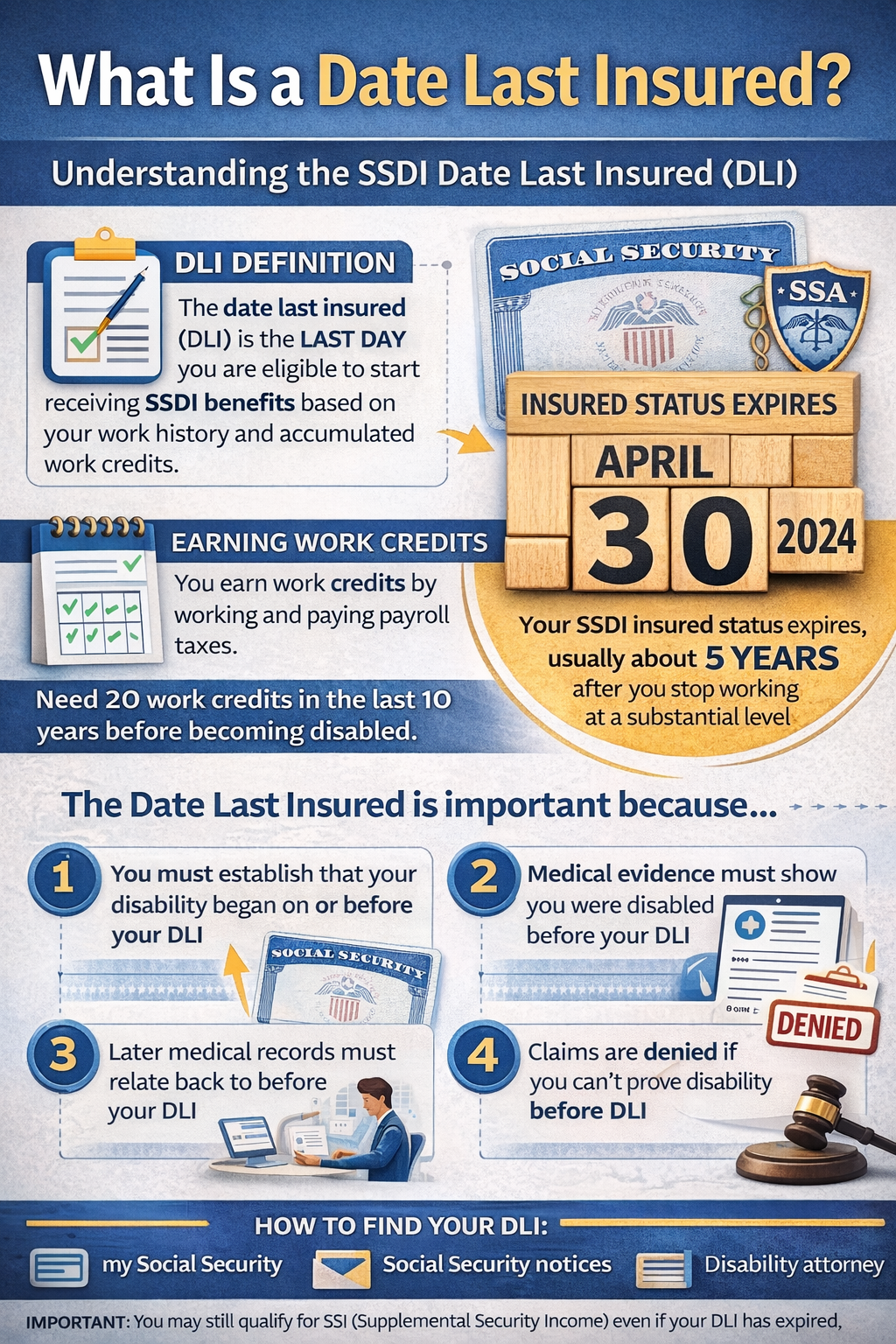
Social Security Disability Insurance (SSDI) is a federal program for people who can no longer work because of a serious medical condition and who have paid enough into the Social Security program through their employment taxes. In many cases, eligibility depends on whether you have earned enough work credits through recent employment. To qualify for SSDI, you must become disabled prior to your “date last insured,” the last date that you have protection against disability.
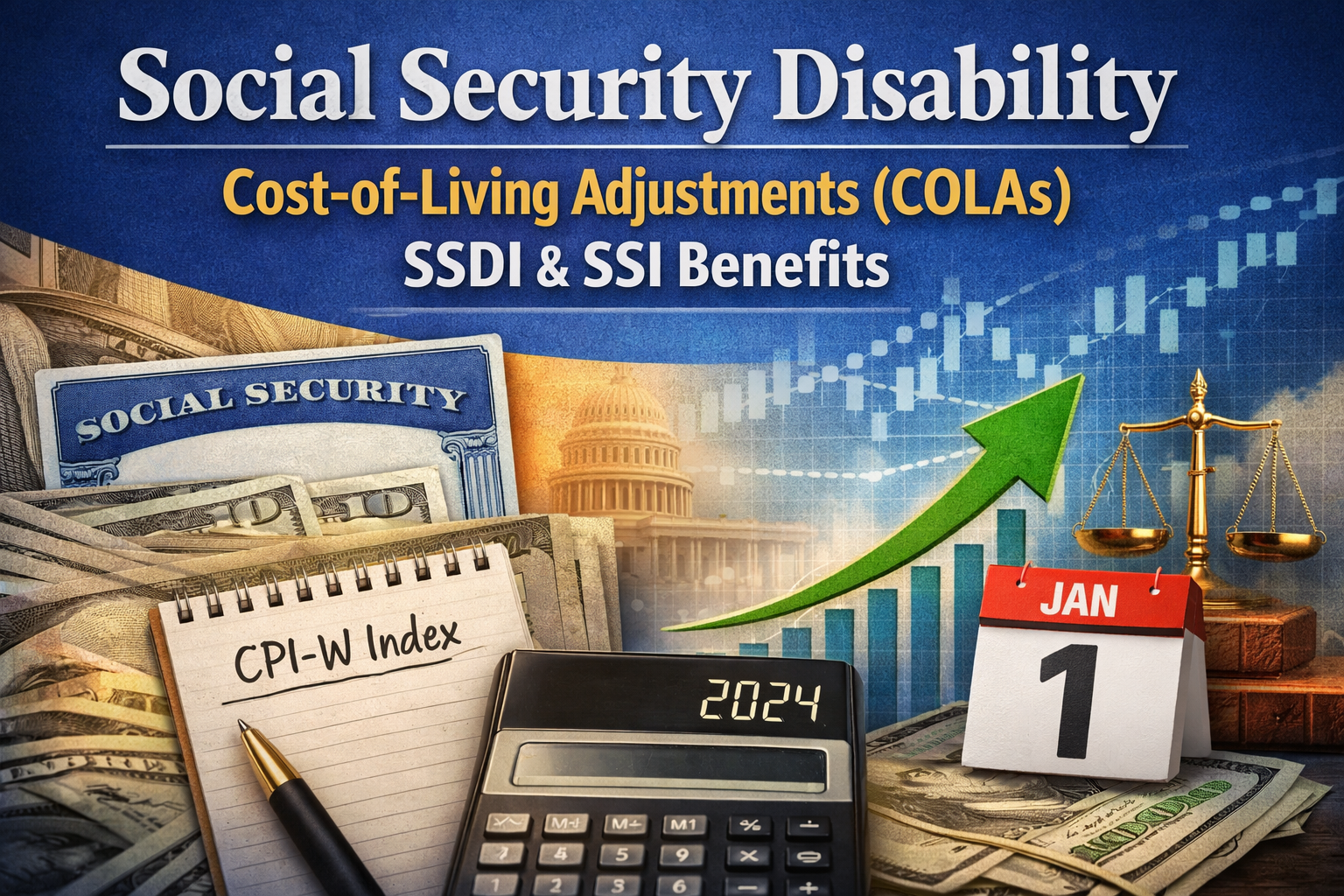
Your monthly SSDI benefit is generally based on your earnings history and how much you paid into Social Security over time. SSDI benefits increase annually to adjust for the cost of living.
Supplemental Security Income (SSI)
Supplemental Security Income (SSI) is also a federal disability program, but unlike SSDI, it is based on financial need rather than work history. If you have not worked enough, or recently enough, to qualify for SSDI, you may still qualify for SSI if you have limited income and limited assets.
SSI usually pays less than SSDI, but it can still provide important monthly support for disabled adults with very few resources.
Ohio’s School Employees Retirement System (SERS)
Ohio’s School Employees Retirement System (SERS) disability program provides monthly benefits to eligible non-teaching public school employees who become permanently physically or mentally disabled for their SERS-covered job. To qualify, a member generally must have become disabled after joining SERS, apply within two years after contributing service stops, and not be receiving a SERS service retirement benefit or disability benefits from another Ohio retirement system; benefit amounts under the current plan are generally the greater of 45% of final average salary or service credit × 2.2% of final average salary.
Ohio’s State Teachers Retirement System (STRS Ohio)
Ohio’s State Teachers Retirement System (STRS Ohio) disability program provides monthly benefits to eligible teachers and other STRS members who have a physical or mental condition that prevents them from performing the duties of their most recent STRS-covered job. STRS Ohio does not provide short-term or partial disability benefits; generally, the condition must be expected to last at least 12 months.
Private short-term or long-term disability insurance
If you or your employer purchased short-term disability insurance or long-term disability insurance before you became disabled, you may be able to file a claim under that policy. These benefits are usually paid through a private insurance company and are based on the terms of the policy.
Veterans’ disability benefits
VA disability compensation is a monthly, tax-free benefit for veterans who were injured or became ill during military service, or whose service made an existing condition worse. Eligibility can include both physical and mental health conditions, and the amount paid generally depends on the veteran’s disability rating and dependents.
Workers’ compensation
Ohio workers’ compensation disability benefits provide wage replacement and related benefits when an employee is injured or develops an occupational disease because of work. Depending on the claim, benefits may be temporary total disability while the worker cannot work, permanent partial disability for lasting impairment, or permanent total disability when the worker cannot return to sustained employment.
What conditions qualify for Social Security disability in Ohio?
To qualify for Social Security disability, you must meet both medical and non-medical eligibility requirements. Perhaps most notably, a medical condition must prevent you from working for at least 12 months (or be expected to last 12 months) or result in death. You generally cannot receive benefits if your condition is expected to improve within 12 months.
The key issue is not just whether you have been diagnosed with a condition. The real question is whether your condition limits your ability to perform substantial work on a sustained basis.
It is misleading—and sometimes plain wrong—to say that certain conditions are the reason for disability in some percentage of cases. Because the Social Security Administration asks about your functional capacities, a disability claim turns on the limitations caused by all medical conditions. We have won cases, for example, based on the collective effects from lower back problems and depression.
Still, we can identify some conditions that we very commonly see in successful disability claims:
- mental health disorders, such as depression, anxiety, bipolar disorder, or schizophrenia
- intellectual disability and related developmental disorders
- musculoskeletal disorders, such as arthritis and degenerative disc disease
- nervous system disorders, such as epilepsy, strokes, and Alzheimer’s
- circulatory system disorders, such as coronary or peripheral artery disease
- respiratory disorders, such as chronic obstructive pulmonary disease (COPD)
- severe injuries, such as car accidents or workplace injuries
This is not a comprehensive list. Since our family first started helping with disability claims in the late 1970s, we have seen just about every condition. It all turns on how your condition limits your ability to work.
Do you automatically qualify for SSDI/SSI based on your diagnosis?
No! This is a common misconception based on Social Security’s “Listings” or “Blue Book” conditions. While some diagnoses appear in Social Security’s listings, that does not mean a diagnosis alone automatically qualifies you for benefits. The “Listings” only result in disability if the claimant has certain measures indicating that the condition is particularly significant, and most people unfortunately do not meet those stringent requirements. In most cases, Social Security looks at how severe your condition is, how long it has lasted or is expected to last, what treatment you have received, and—most importantly—how your symptoms limit your ability to work. Even if your condition is listed, you still usually need medical evidence showing that you meet the specific requirements.
SSDI qualifications in Ohio
To qualify for SSDI in Ohio, like elsewhere in the United States, you generally must:
- have a medical condition that prevents you from working for at least 12 months or is expected to result in death
- be under full retirement age when applying for disability benefits
- have enough recent work history and work credits for your age
SSI qualifications in Ohio
To qualify for SSI in Ohio, like elsewhere in the United States, you generally must:
- meet Social Security’s disability standard
- have very limited income
- have very limited assets or resources
Because SSI is a needs-based program, Social Security looks closely at your bank accounts, available resources, household finances, and other income sources when deciding eligibility.
How to apply for Social Security disability in Ohio
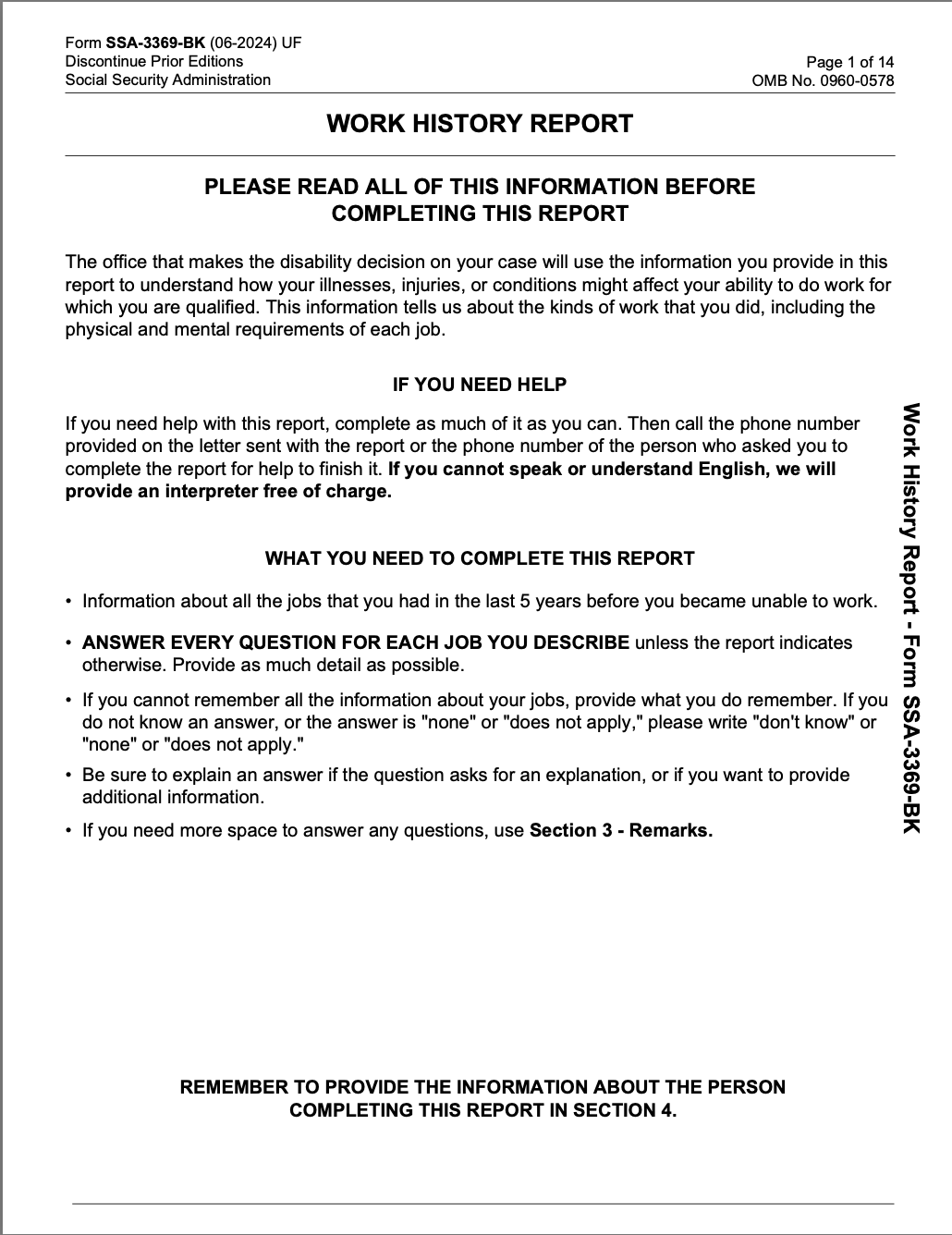
You can apply for disability benefits in Ohio either on your own or with help from a representative or lawyer. In most cases, you will need to submit an application along with additional information about your medical treatment, work history, daily limitations, and financial circumstances if you are applying for SSI.
There are generally four main ways to apply for disability benefits:
- online through the Social Security Administration website;
- through a phone call with Social Security;
- through paper applications, using the Social Security Administration forms; or
- in person at your local Social Security office.
Before applying, it helps to gather:
- medical records
- names and contact information for doctors and specialists
- work history
- education records
- bank account and financial information
- medications and treatment history
- dates of treatment and hospitalizations
When completing the forms, it is important to be truthful, specific, consistent, and realistic about your limitations. Social Security may also ask for more information or request that you attend a consultative examination.
Who handles disability claims in Ohio?
In Ohio, the medical review of SSDI and SSI claims is handled by the Division of Disability Determination (DDD)within Opportunities for Ohioans with Disabilities (OOD), working under agreement with—and funded by—the Social Security Administration. That means disability claims in Ohio usually move through both a federal application system, processed at a local office, and an Ohio-based medical determination through an office in Columbus.
How long does it take to get disability benefits in Ohio?
The disability process in Ohio can be slow, especially if your case moves beyond the initial application stage. The Social Security Administration estimates that an initial disability decision generally takes 6 to 8 months. But initial disability processing times vary by state. The Social Security Administration Office of the Inspector General (OIG) published a July 2025 report that indicates Ohio, on average, processes initial disability claims in 136.8 days.
Just based on our experience, we might estimate that claims are currently processing a little slower than when the OIG issued its July 2025 report. The Social Security Administration has dealt with hiring freezes over the past few years, and our local offices have estimated lower staffing than within any manager’s memory. Moreover, the Social Security Administration has reallocated resources to improve phone call processing. While phone call times have improved, we understand that staff hours have been allocated away from disability claim processing.
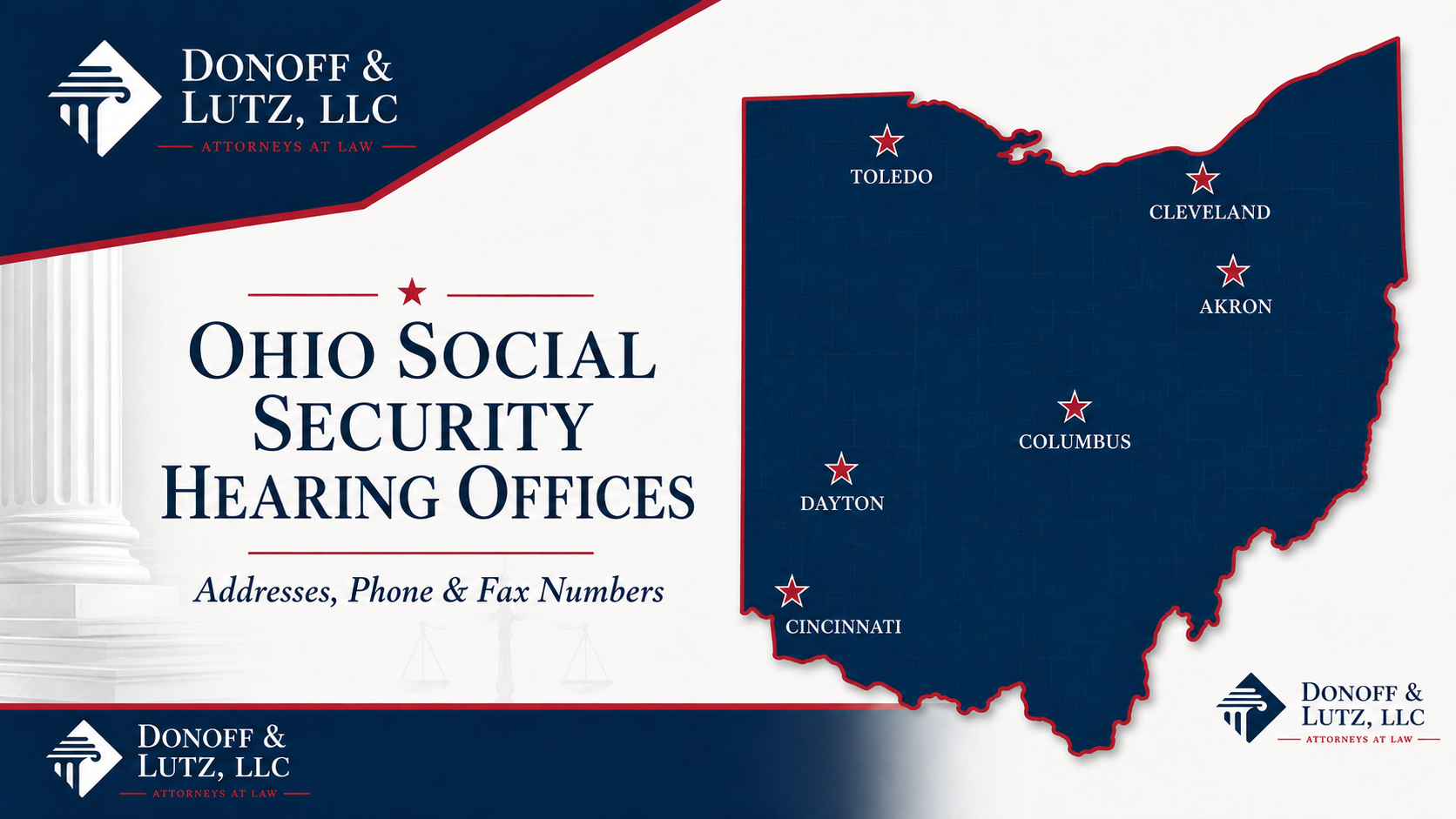
Many claims unfortunately have to proceed to the hearing level. After requesting a hearing, most people have to wait between 7 and 10 months for a hearing. At the time of publication, four Ohio-based hearing offices (Akron, Cincinnati, Cleveland, Toledo) have an average wait of seven months; the Columbus office takes an average of eight months; and the Dayton office takes an average of nine months. We might note that the Dayton, Ohio hearing office is one of the most efficient hearing offices in the country, with the Administrative Law Judges publishing more than two decisions per day; in our opinion, the Dayton, Ohio hearing office is simply understaffed.
How much do disability benefits pay in Ohio?
The amount you receive depends on the program.
SSDI payment amounts
Your SSDI payment is based on your work history and past earnings. People with higher lifetime earnings usually receive larger monthly SSDI benefits than people with lower earnings histories. In 2026, the average monthly SSDI benefit is $1,630 per month, with a maximum benefit of $4,152 per month.
SSI payment amounts
In 2026, the federal benefit rate for SSI benefits is $994 per month for an individual, or $1,491 per month for a couple. In many cases, the Social Security Administration reduces monthly benefits due to an SSI recipient’s income or living situation. Ohio does not supplement the federal benefit rate with additional monetary benefits.
What happens after you apply?
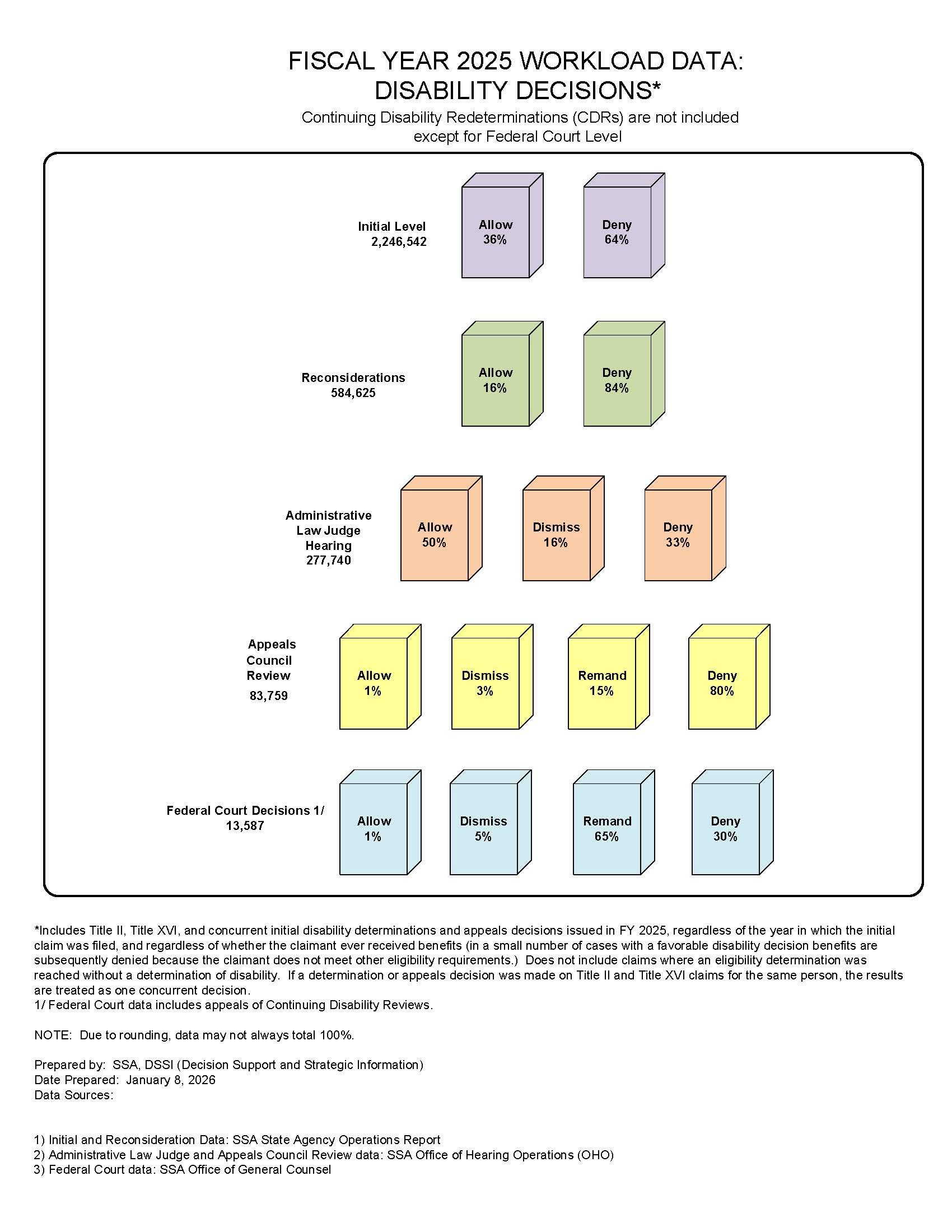
Many disability applicants are denied at the initial stage. If that happens, the next steps may include:
- reconsideration (another review by the Division of Disability Determination (DDD) within Opportunities for Ohioans with Disabilities (OOD))
- a hearing before an administrative law judge
- further appeal to the Appeals Council and federal court.
Because the process can take a long time, many people end up spending many months or even years moving through the system before receiving a final decision.
Do you need a disability lawyer in Ohio?
You are not required to hire a lawyer to apply for SSDI or SSI in Ohio. Many people apply on their own. If you would like help from a disability lawyer, Donoff & Lutz, LLC helps claimants throughout Ohio.
Based on the statistics, however, claimants with attorneys seem to do much better: according to Government Accountability Office statistics, attorney-represented claimants are almost three times more likely to win at a hearing, and according to a National Bureau of Economic Research paper, attorney-represented claimants are approved 316 days faster. And, hopefully, a good attorney will make sure you are much more comfortable—and have to do much less work—during the disability claims process.
Frequently asked questions about disability in Ohio
How do I qualify for disability in Ohio?
To qualify for disability benefits, you generally need a medical condition that prevents you from working for at least 12 months or is expected to result in death. You must also meet the technical rules for the program you are applying for, such as work-credit requirements for SSDI or income and asset limits for SSI.
What conditions qualify for disability in Ohio?
Many physical and mental conditions can qualify if they are severe enough to prevent substantial work for the required length of time. Common categories include mental disorders, musculoskeletal conditions, nervous system disorders, circulatory problems, and severe injuries.
How long does it take to get approved for disability in Ohio?
Approval times vary. SSA currently says an initial disability decision generally takes 6 to 8 months, and Ohio hearing-office wait times vary by office, with recent estimates ranging from about six months in Toledo to ten months in Dayton.
How much does disability pay in Ohio?
There is no single disability payment amount that applies to everyone. SSDI depends on your earnings history. SSI depends on financial need and other countable income.
Does Ohio have a state disability program?
In most cases, no. Ohio residents usually look to federal disability programs such as SSDI and SSI, along with private disability insurance or veterans benefits when applicable.
Disclaimer: The information provided in this blog is for general informational purposes only and does not constitute legal advice. Reading this blog does not create an attorney-client relationship. For advice specific to your situation, please speak directly with a Social Security disability lawyer.